Porsche Teased Mission S Based Supercar Above the 911
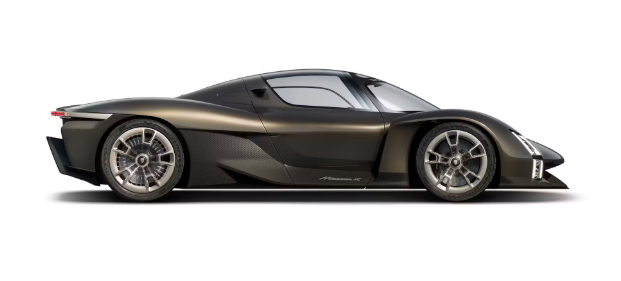
Porsche is developing a mid-engine supercar that will sit above the Porsche 911, the first model in that position since the 918 Spyder. It will be previewed by the Porsche Mission S concept on October 15, 2026. At its Capital Markets Day in Weissach on October 7, 2026, the company announced development of a mid-engined super sports car platform that will spawn a new model line sitting over its most famous nameplate.
Porsche has not said which engine the car will use. In September, German business daily Handelsblatt reported that the flagship, code-named S1, will use a twin-turbo flat-eight (an eight-cylinder boxer engine). If accurate, it would be the first flat-eight in a production Porsche road car.
The announcement lands in the same strategy that commits the next Boxster and Cayman to electric power only, two decisions that together change the shape of the Porsche sports car lineup for the rest of the decade.
Porsche Mission S Concept: What We Know About A Potential 911 Topping Supercar
Porsche will preview the new platform with the Porsche Mission S concept on October 15, 2026; evo reports the unveiling will take place in New York. CEO Michael Leiters told evo the company is developing a super sports car platform as the basis for a mid-engined car positioned clearly above the 911, and described the Mission S as an idea of what that car might look like.
The official language is still hedged. Porsche’s own release speaks of a “potential” mid-engined platform, and it has given no power figure, cylinder count, gearbox, production date or price. It has also not said whether the Mission S name will reach production.
Ferrari is often cited as the reference point, including in Leiters’ presentation.
The Porsche flat-eight engine: from racing cars to a possible road car
A flat-eight would be a first for a Porsche production car. The company has built eight-cylinder boxers before, but only for competition.
- 1962: Porsche’s 1.5-liter Formula 1 flat-eight carried Dan Gurney to victory at the French Grand Prix
- Late 1960s: A 3.0-liter flat-eight powered the Porsche 908 race car; detuned versions went into two experimental Porsche 914/8 road cars, one of them a 60th-birthday gift to Ferry Porsche.
- Recent years: Porsche built a 5.0-liter twin-turbo flat-eight with about 750 hp and 738 lb-ft, revving to 9,000 rpm, and tested it in a Cayman-based prototype with rear-wheel drive and a manual gearbox. The project did not reach production
That prototype makes the S1 report more plausible. French outlet Le Tribunal du Net expects any production version to be paired with electric assistance to match hybrid rivals, though Porsche has not said whether the car will be pure combustion or hybrid.
Not every report agrees. Automotive News reported that Leiters favors a V8, with the flat-plane unit from the Lamborghini Temerario cited as a candidate. Packaging is also a known hurdle: a former VW Group powertrain chief once said a 5.0-liter flat-eight was probably too big for the 911, which is one reason it would make more sense in a mid-engined car.
Another company may put a flat-eight on the road first. Tuner RUF showed a twin-turbo flat-eight of its own at the 2026 Goodwood Festival of Speed, rated at more than 1,000 hp and 1,000 Nm (738 lb-ft).
Why Porsche Wants A New Supercar In Production: The Sportwagenschmiede ’35 Strategy
The new supercar is one part of a wider Porsche turnaround plan. Porsche’s profit fell from the equivalent of $5.9 billion in 2024 to $101 million in 2025 (, hit by weak China sales and costly early investment in EVs.
Porsche’s outlined strategy, Sportwagenschmiede ’35 (roughly “sports car forge ’35”), presented on October 7, focuses on selling fewer, more expensive cars:
- Break-even below 200,000 cars a year, against 279,449 delivered in 2025.
- Average price of the top models up about 20%
- About 20% fewer model variants, and at least one brand-defining new product every year through 2030.
- Workforce down 25% in the medium term, management down 40%.
- Combustion, plug-in hybrid and electric powertrains sold side by side, with roughly two combustion or hybrid models for every EV.
A low-volume supercar priced around 570,000 fits that approach. It also suits Leiters, who ran McLaren Automotive and was Ferrari’s technology chief before arriving in January, and who was openly skeptical of electric supercars at McLaren.
No Gas-Powered Porsche 718 Boxster or Cayman Afterall
On the same day it outlined a combustion-engine supercar, Porsche confirmed that the next Porsche 718 Boxster and 718 Cayman will be electric only. Both are due to debut in 2027, with 2028 as their first full year of production.
The decision reverses earlier signals from Porsche. A September 2025 investor slide listed “Top ICE derivatives for new 718,” which many read as successors to the 4.0-liter Cayman GT4 and 718 Spyder. Porsche now says a combustion 718 was never formally approved, and a spokesperson told CarBuzz there are no plans for one. The outgoing gas 718s have been out of production for a year, so the gap in showrooms will run close to two.
What it means for the Porsche sports car lineup:
- A higher entry price. evo reports the electric 718 will cost considerably more than the model it replaces, to cover its dedicated mid-engine EV architecture. The least expensive new gasoline Porsche sports car becomes the 911, which starts around $138,000
- Combustion engines move up the range. Gasoline and hybrid powertrains will be concentrated in the 911, new high-end 911 derivatives and the supercar above it.
- Two very different mid-engine Porsches. The lineup will have a mid-engine car at each end: an electric 718 at the entry point and a combustion flagship at the top, with the rear-engine 911 between them.
- The 911 carries the combustion lineup. Leiters has said the 911 will never be electric, so it becomes the natural choice for buyers who were waiting for a gasoline Cayman GT4 or 718 Spyder successor.
The main question is at the entry point. The Boxster and Cayman have long been how many buyers first come to Porsche. An EV-only 718 will need to win over enthusiasts at a time when Porsche’s own strategy acknowledges that EV demand has been weaker than planned. Also, considerably higher potential entry prices could deter future Porsche owners. Still, it does fit with the overall strategy of separating the 718 and 911, as well as pushing car prices higher making Porsche a more exclusive brand.
If nothing else, it certainly is a good way for the 718 to limit how much it cannibalizes 911 sales.
Porsche Sports Car Lineup Outlook: 718, 911 And The New Flagship
By around 2028 to 2030, the Porsche two-door lineup is expected to run from the electric 718 Boxster and Cayman to a combustion-engine flagship, with the Porsche 911 in the middle.
| Tier | Model | Layout | Powertrain | Timing |
|---|---|---|---|---|
| Flagship | New supercar (codename S1, reported) | Mid-engine | Combustion, likely hybrid; flat-eight reported, not confirmed | Concept October 15, 2026; production date not given |
| Core | 911 and new high-end 911 derivatives | Rear-engine | Combustion and hybrid; never electric, per Leiters | On sale; derivatives to come |
| Entry | 718 Boxster and Cayman | Mid-engine | Electric only | Debut 2027; first full production year 2028 |
The Porsche Mission S reveal on October 15 may begin to answer the open questions: how many cylinders the engine has, whether it is a flat-eight or a V8, and whether it is paired with a hybrid system. Until Porsche confirms it, the flat-eight remains a report rather than a specification.
