The History Of The Exomotive Exocet
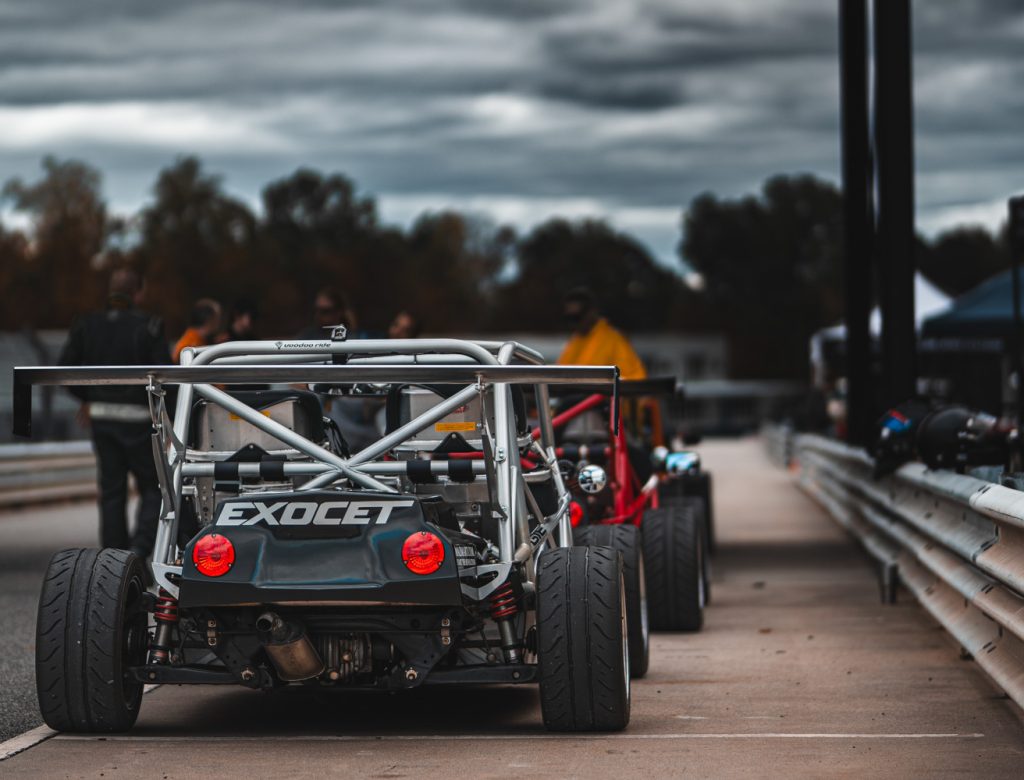
The Exocet is a minimalist, open-cockpit “exoskeletal” sports car that you build yourself by bolting the running gear of a 1990–2005 Mazda Miata into a tube-frame chassis. In the US it is made by Exomotive, an Atlanta-area company that has built the car since 2011. A finished Exocet typically weighs 1,400–1,700 lb, a few hundred pounds less than the Miata it came from, and can be configured for anything from weekend back roads to dedicated track use or light off-roading.
History
Despite US Exocets being founded in Atlanta, The Exocet itself began in England. Mills Extreme Vehicles (MEV), a Gloucestershire kit-car maker founded in 2003 by Stuart Mills and Julie Wilson, debuted the MEV Exocet in June 2010 at the Newark kit car show. It was designed as a single-donor, front-engine, rear-drive car based on the Mazda MX-5 and aimed squarely at first-time builders.
The American ExocetAtlanta entrepreneur Kevin Patrick, a Georgia Tech alumnus with a background in autocross, track days and competitive skydiving, bought one of the early kits and built it himself. As US interest grew, he visited Stuart Mills at MEV in July 2011 and reached an agreement for his new company, Exomotive, to become the exclusive US provider of the Exocet.
Key milestones:
| Year | Milestone |
|---|---|
| 2010 | MEV launches the Exocet in the UK |
| 2011 | Exomotive founded (July) as exclusive US distributor |
| 2012 | Engineer Warren van Nus joins; Exomotive and MEV refine the design for the US market |
| 2013 | Final chassis production moves to the US; Exomotive leaves Roswell, GA for a new Atlanta production facility |
| 2014 | First annual EXOFEST owners’ track day at Atlanta Motorsports Park |
The US redesign was more than a left-hand-drive conversion. Patrick and van Nus worked to integrate the bodywork with the chassis and cut weight, saving roughly 700–900 lb versus the donor Miata. Patrick estimates a typical complete car costs around $10,000 to build.
The car has since built a strong enthusiast following, including a Facebook Exocet Owners Club, a long-running annual EXOFEST track day, and competition appearances such as SCCA’s Targa Southland, where an Exocet driven by Randy Pobst and Jason Owens led the Unlimited class in 2017.
Georgia Roots
Exomotive describes itself as proudly based in Atlanta, Georgia. The company started in Roswell, moved chassis production into a dedicated Atlanta facility in October 2013, and its current pricing page lists kits as made in the USA at a facility in Rome, GA. Kits can be picked up at the factory or shipped nationwide by freight.
The team also has deep Georgia Tech ties: founder Kevin Patrick, head engineer Warren van Nus (a former Georgia Tech Motorsports member), and Electrocet contributor Ben Horst are all alumni.
For Atlanta-area builders, being close to the factory makes it easy to tour the shop, pick up a kit in person and meet other owners before committing.
Exocet Community
Exocet owners enjoy an active community, something that can often be missing with other kit car companies. In addition to Exomotive themeslves, there is an active Facebook owners group. There are also Facebook groups for LS powered Exocet owners and builders.
In addition, once a year Exomotive teams up with Jzilla Track Days for Exofest. This annual event features a track day with run groups from novice with instructors all the way to advanced. In addition, Exomotive setups an display of recent Exomotive models. They also offer ride alongs on track with various models as a way to introduce owners to track driving as well as potential buyers to the capabilities of the platform.
The Donor Vehicle: Mazda Miata (NA and NB)
The Exocet is designed around a single donor: a 1990–2005 Mazda Miata, covering the first-generation (NA) and second-generation (NB) cars. The builder removes the Miata’s steel body and bolts its engine, transmission, differential, front and rear subframes, suspension, steering, brakes and wiring onto the Exocet chassis. Mazda built more than 700,000 NA and NB Miatas, so donors remain plentiful and parts are cheap (Exomotive donor guide).
| Donor | Years | Engine (stock) | Notes for an Exocet build |
|---|---|---|---|
| NA6 | 1990–1993 | 1.6L, 115 hp | Lightest build; driveline good to ~200 hp; original viscous LSDs are usually worn out |
| NA8 | 1994–1995 | 1.8L, 129 hp | Pre-OBD-II, which can ease emissions compliance in some states; Torsen LSD available |
| NA8 | 1996–1997 | 1.8L, 133 hp | OBD-II; some states require emissions equipment to stay |
| NB1 | 1999–2000 | 1.8L, 140 hp | Better-flowing head and torque curve; good turbo base; returnless fuel system |
| NB2 | 2001–2005 | 1.8L, 143 hp | Variable valve timing; tall VVT actuator needs careful hood placement |
| Mazdaspeed | 2004–2005 | 1.8L turbo, 178 hp | Factory turbo, but often cheaper to turbo a regular NB |
Other donor considerations:
- Transmission: 5-speed manuals are the most common. The 1999–2005 6-speed handles more power. Automatics are compatible but sap power.
- ABS: works, but Exomotive does not recommend it because it adds complexity and weight.
- Not compatible: the 2006–2015 NC MX-5 and other platforms (S2000, 240SX, MR2, BMW E36, BRZ/FR-S) would need very extensive modification. Note that MEV in the UK separately offers an NC-based “MK3” Exocet, but that is not Exomotive’s US product.
One practical tip: your state’s emissions rules can make some model years far easier to register than others. Check out our guide to registration for kit cars for more information on what is often involved with various kit vehicles.
Models, Options And Common Configurations
Exomotive sells three chassis kits; the Off-Road shares the Race chassis. All kits include the chassis, aluminum bulkheads, smoked polycarbonate side panels, fiberglass nose, hardware, brake lines and an online build guide.
| Kit | Price | Roll protection | Floors | Best for |
|---|---|---|---|---|
| Exocet Base | $8,999 | Street roll bar, 3-point seatbelts | Aluminum | Fun street car; not for competition |
| Exocet Sport | $9,299 | Roll bar exceeding SCCA/NASA/FIA/MSA specs; harness bar for 4–6 point harnesses | Aluminum | Most popular; street plus track days |
| Exocet Race / Off-Road | $9,999 | Full cage with passenger diagonal, tube-gusseted halo, dash-level tie-in | Welded 18-gauge steel | Dedicated track car, racing, or lifted off-road build |
Core specs: 132 in long, 89.2 in wheelbase, 68.4 in wide, 47 in tall, 1,400–1,700 lb, and 100–700 hp depending on the drivetrain. Ordering takes a $2,000 deposit; Exomotive quoted a lead time of about 16+ weeks as of August 2026. Exomotive does not sell finished cars or rollers, but third-party assemblers can help.
Factory Options
| Option |
|---|
| Chassis media blasting and powder coating (6,500+ colors) |
| Fiberglass fenders and mount kit (with kit) |
| Rear APR GTC-200 wing |
| Rear NLR wing |
| Front NLR wing |
| RAL-color gelcoat upgrade |
| Front wing mount |
| Rear wing mount (CoT or APR/NLR) |
| Dominator headlights (pair) |
| Aluminum wiring tray |
Common powertrain configurations
- Stock Miata 1.6L or 1.8L: the cheapest, simplest build; already quick at roughly 1,400–1,500 lb.
- Turbo or supercharged Miata 1.8L: widely seen as the best value for more power, often with Flyin’ Miata kits.
- Honda K-series (K20/K24) via KPower Industries, or Honda J-series V6 via MiniTec.
- GM LFX V6 or LS-series V8 using the Exomotive/V8Roadsters swap kit; a 525 hp LS3 Exocet weighs about 1,690 lb. Ford 302 swaps are also possible.
- Custom: a mount-less front subframe is available for rotary, motorcycle (Hayabusa) or other engines. The Tesla-powered Electrocet prototype ran 0–60 mph in 2.8 seconds but has not been released.
Registration: Challenges And Suggestions
An Exocet is recommended to be registered through your state’s custom, kit or “specially constructed” vehicle process, not as a Mazda Miata. Rules vary widely by state, and paperwork, not the build itself, is where most owners get stuck. This section is general guidance, not legal advice; confirm details with your state’s motor vehicle agency.
Common Challenges
- Paperwork gaps. States typically want the kit’s Manufacturer’s Statement of Origin (MSO), the donor title, and receipts for major parts. A missing donor title is one of the hardest problems to fix after the fact.
- Emissions. Many states tie emissions rules to the engine’s year or the donor’s model year. Exomotive notes that 1994–1995 cars are pre-OBD-II and can be easier in some states, while 1996-and-later cars may need emissions equipment retained.
- Equipment requirements. Inspectors may check lights, turn signals, mirrors, horn, windshield or eye protection, and in some states fenders or mudguards. Exomotive sells fiberglass fenders ($865) and headlights for builders who need them.
- Inspectors unfamiliar with kits. Georgia kit-car builders report that some inspectors and DOR staff don’t know the non-replica kit process well, so expect to explain and document.
- VIN assignment. Some states issue a new state-assigned VIN; others keep the donor VIN. Make sure the VIN on your title matches what your insurer has on file.
How To Insure An Exocet
The simplest route for most owners to get an Exocet covered is a specialty enthusiast broker. Mainstream insurers often decline cars like the Exocet because they look “too race-like,” have an open cockpit, are home-built, or don’t appear in the carrier’s model database.
Some agents have been known to work around this by writing the car up as a regular Miata or another model. Generally it is not recommended you go with one of these “trick” approaches: it can cause trouble keeping coverage, complicate claims, and potentially leave you short of the car’s real value in the event of a total loss.
Please note that this information is not intended to be direct insurance advice, but general information to provide you with questions to ask a licensed insurance agent about.
Steps to get covered
- Decide how you’ll use the car: street-registered, trailer-only, track days, or off-road. This determines which program fits.
- Estimate replacement value, including the kit, donor, engine swap, powder coat and other upgrades. Keep receipts; they support the agreed value.
- Ask about build-stage timing. Before committing to the purchase, or even during the build phase, we’d recommend reviewing the insurance options available. Waiting until you are past a point of no return may leave you in a situation where you cannot drive your Exocet.
- Add track coverage separately when needed. In most instances, on track coverage is separate from storage, tailer and paddock or on street coverage. However, there are bundles that starting to become available, though be sure to check whether your Exocet qualifies.
